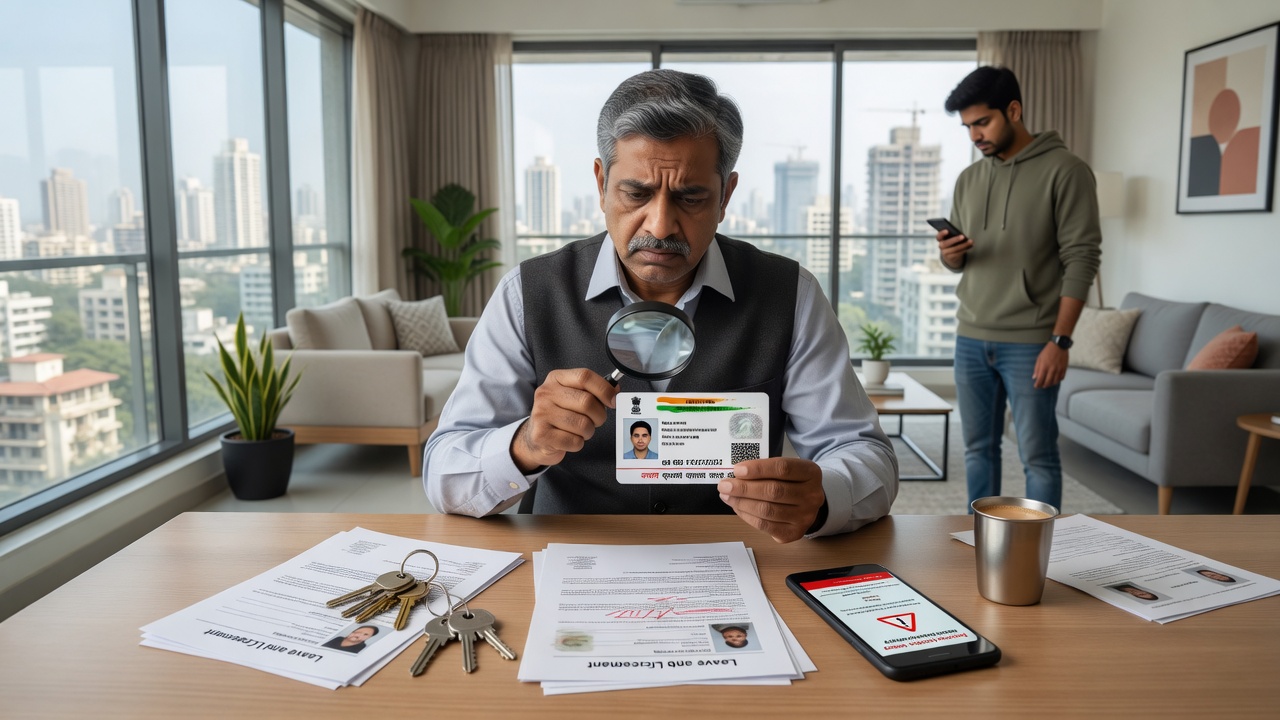
Tenant Gave Fake Aadhaar: What Can a Landlord Legally Do?
In India's dynamic rental landscape, particularly in major cities such as Delhi, Mumbai, Bangalore, and Hyderabad, landlords commonly request Aadhaar cards during the tenant screening process. The Aadhaar card, a 12-digit unique identification number issued by the Unique Identification Authority of India (UIDAI), is widely accepted as proof of identity and address. However, the surge in rental fraud cases where tenants submit fake Aadhaar cards has left many property owners vulnerable to financial losses, legal complications, and security risks. Discovering that a tenant has provided a forged document can be alarming, raising immediate questions about next steps and available legal remedies.
This detailed guide addresses the critical topic of what landlords can legally do when faced with a tenant who has given a fake Aadhaar. We will explore detection methods, relevant Indian laws, step-by-step actions, eviction procedures, and proactive prevention strategies. It is essential to emphasize that this content is for educational and informational purposes only and does not constitute legal advice. Laws can vary by state, and individual circumstances differ, so consulting a qualified property lawyer or legal expert is strongly recommended before taking any action. By understanding your rights and responsibilities, you can protect your property investment while adhering to the law.
Understanding the Importance of Aadhaar in Tenant Verification
Aadhaar serves as India's most comprehensive identity system, incorporating biometric data such as fingerprints, iris scans, and facial recognition along with demographic details like name, date of birth, and address. For landlords, requesting an Aadhaar card during tenant onboarding provides reassurance that the individual is genuine and traceable. It is often attached to rental agreements, which may need registration under state-specific stamp duty and registration laws. In many cases, landlords use it for basic KYC-like checks to ensure the tenant has a legitimate background.
Despite its utility, the Aadhaar system has vulnerabilities. The rise of sophisticated digital tools has made forging Aadhaar cards more accessible, with fraudsters using photo editing software, fake printing services, or even cloned QR codes to create convincing replicas. Landlords are not authorized to perform full biometric authentication, as that privilege is reserved for designated agencies under the Aadhaar Act. Instead, practical verification relies on e-Aadhaar downloads from the official UIDAI website, which feature scannable QR codes. This limitation underscores why cross-verification with other documents like PAN cards, voter IDs, or passports is advisable.
The use of Aadhaar in rentals is generally voluntary but has become standard practice due to its reliability when authentic. Providing false Aadhaar information in a tenancy agreement constitutes material misrepresentation, which can invalidate the contract and expose the tenant to both civil and criminal liabilities. Understanding this context helps landlords appreciate why prompt and proper handling of fake Aadhaar cases is crucial for maintaining control over their properties.
Signs That an Aadhaar Card Might Be Fake
Detecting a fake Aadhaar card early can save landlords significant trouble. While not every anomaly indicates forgery, certain red flags warrant further investigation. Start by examining the physical card for quality issues. Genuine Aadhaar cards feature high-resolution printing, a distinctive hologram, micro-text, and a secure lamination process that is difficult to replicate perfectly. Fake versions often show pixelation, uneven colors, or smudged text.
Next, scrutinize the details for inconsistencies. Compare the photograph with the tenant's appearance, and cross-check the name, date of birth, and address against other provided documents or verbal statements. Mismatches in age appearance or residential history are common giveaways. The QR code on the card is a key verification tool. Tenants can be asked to download their e-Aadhaar from uidai.gov.in, which generates a fresh QR code. Using the official mAadhaar mobile app, scan this code to validate the details against UIDAI records. If the scan fails or reveals discrepancies, the document is likely fabricated.
Additional signs include the absence of proper security features like the ghost image or the use of non-standard fonts. Address mismatches are particularly telling—if the Aadhaar lists a distant city but the tenant claims local residency without a valid explanation like recent relocation, it raises suspicion. Landlords should never rely on a single document; always request multiple forms of identification and consider third-party background checks. Practical tip: During initial meetings, observe if the tenant hesitates to provide the e-Aadhaar version or offers excuses for not having it readily available.
Legal Implications of Providing a Fake Aadhaar
Submitting a fake Aadhaar card triggers multiple legal violations under Indian statutes. The most relevant provisions come from the Indian Penal Code (IPC), though newer laws like the Bharatiya Nyaya Sanhita (BNS) have similar replacements. Key sections include IPC 420 for cheating and dishonestly inducing delivery of property, which carries a punishment of up to seven years imprisonment along with a fine. This applies because the tenant uses the fake document to secure the rental property.
Forgery-related offenses are covered under IPC Sections 463 and 464, which define forgery as making a false document with intent to cause damage or injury, and IPC 468 for forgery specifically for the purpose of cheating. Penalties can include imprisonment ranging from two to seven years. The Aadhaar (Targeted Delivery of Financial and Other Subsidies, Benefits and Services) Act, 2016, explicitly prohibits the creation or use of fake Aadhaar cards. Violations can result in imprisonment up to three years and fines, with enhanced penalties if used for fraudulent purposes like renting property.
Beyond criminal charges, the act of misrepresentation allows the landlord to treat the rental agreement as voidable. Under the Indian Contract Act, 1872, contracts induced by fraud or misrepresentation are not binding. This opens doors for civil claims for damages, unpaid rent recovery, or property repair costs. In some states, rent control laws may influence proceedings, but fraud generally strengthens the landlord's position. Tenants could also face additional scrutiny if the fake Aadhaar was used to open bank accounts or access other services, potentially leading to multi-agency investigations.
Immediate Actions a Landlord Should Take
Upon discovering or suspecting a fake Aadhaar, act methodically to protect your interests without escalating unnecessarily. Begin by documenting everything meticulously. Retain the original fake document, all copies, the signed rental agreement, payment receipts, and any email or message exchanges with the tenant. Note the exact date and circumstances of discovery, including any witness statements. This evidence will be vital for police complaints or court cases.
Next, attempt independent verification using official channels. Request the tenant to provide a fresh e-Aadhaar download and scan the QR code yourself or with the mAadhaar app. Avoid confronting the tenant aggressively at this stage; instead, schedule a calm discussion to present your findings and seek an explanation. Tenants sometimes have legitimate issues like data errors from UIDAI, though this is uncommon. Provide them a reasonable opportunity to respond in writing.
Consult a lawyer specializing in property and tenancy laws immediately. A professional can review your documents and advise on jurisdiction-specific rules. Draft and send a formal legal notice through the lawyer demanding clarification or vacation of the premises within a set timeframe, typically 15 to 30 days. Throughout this process, avoid self-help measures such as changing locks, disconnecting utilities, or removing the tenant's belongings, as these can lead to counterclaims of illegal eviction. A practical example involves a landlord in Chennai who documented a fake Aadhaar discovery, verified it via QR code, issued a notice, and resolved the matter without police involvement when the tenant vacated voluntarily.
How to File a Police Complaint
If verification confirms fraud and the tenant refuses to cooperate, filing a police complaint is a legitimate next step. Visit the local police station in the jurisdiction where the property is located. Carry all supporting evidence, including the fake Aadhaar, rental agreement, identification proofs, and a written complaint detailing the timeline and impact. The police are obligated to register a First Information Report (FIR) for cognizable offenses like cheating and forgery under IPC Sections 420 and 468.
Provide a clear statement and any additional information, such as the tenant's contact details or known associates. The police may conduct an investigation, which could include visiting the property, questioning the tenant, and verifying records with UIDAI. In serious cases, this may result in the tenant's arrest and charges being framed. Follow up regularly with the investigating officer and obtain a copy of the FIR for your records. Note that under the new criminal procedure laws, timelines for investigation have been streamlined, but real-world delays due to caseloads are common.
Involving law enforcement adds a criminal dimension that can pressure the tenant to settle dues or vacate. However, it does not automatically resolve the tenancy; civil proceedings for eviction may still be necessary. Landlords should be prepared for the process to take several months. If the fraud involved larger schemes, such as using the property for illegal activities, the police may expand the case accordingly.
Eviction and Legal Remedies
Criminal complaints and eviction are parallel but distinct processes. Even with an FIR filed, you must follow civil procedures to regain possession of the property. Begin with a lawyer-drafted legal notice to the tenant citing the fraud as a breach, demanding vacation and any outstanding payments. If the tenant does not comply, file an eviction suit in the appropriate forum—often the Rent Controller's court in rent-controlled areas or civil court otherwise.
Under the Transfer of Property Act, 1882, landlords can seek eviction for breach of terms, including misrepresentation. State-specific rent control legislations, such as the Delhi Rent Control Act or Maharashtra Rent Control Act, may require proving grounds like bona fide need or tenant default. The court will examine evidence of the fake Aadhaar as supporting material for your claim. Additionally, you can file a separate civil suit for recovery of damages, including lost rent, legal fees, and property repairs caused by the tenant's actions.
The process typically involves summons, hearings, and possible mediation before a decree is issued. Enforcement of the eviction order may require police assistance if the tenant resists. Throughout, maintain professionalism and records to strengthen your case. Practical examples show that many cases settle out of court once the tenant realizes the seriousness of forgery charges, allowing landlords to recover partial losses without prolonged litigation.
Preventive Measures to Avoid Fake Aadhaar Issues
The best defense against fake Aadhaar fraud is robust prevention during tenant selection. Implement multi-layered screening processes from the outset. Always insist on e-Aadhaar for QR-based verification rather than accepting printed copies alone. Cross-verify with at least two additional government-issued IDs, such as PAN card for tax details or passport for international context if applicable.
Engage professional tenant verification agencies that offer background checks, employment confirmation, and limited Aadhaar authentication where permitted. Include explicit clauses in your rental agreement stating that any false or forged documents will result in immediate termination, forfeiture of security deposit (subject to legal limits), and potential legal action. Conduct in-person viewings and reference checks with previous landlords or employers.
For high-value properties or long-term leases, require police verification as mandated in some states or insist on a guarantor with verified credentials. Maintain digital and physical records of all verifications performed. Educate yourself on common fraud patterns through real estate forums or legal updates. By investing time upfront in thorough screening, landlords can minimize risks and avoid the stress and costs associated with post-tenancy fraud discoveries.
Risks of Ignoring the Fraud
Failing to address a discovered fake Aadhaar can lead to compounding problems for landlords. The tenant might sublet the property illegally, engage in criminal activities on the premises, or cause extensive damage before disappearing, leaving you with unpaid bills and repair expenses. Without accurate identification, pursuing recovery through courts becomes significantly harder, as locating the individual or enforcing judgments is complicated.
Additionally, prolonged tenancy with fraudulent documents can create title disputes if you decide to sell or refinance the property. Banks and buyers often require clear tenant records. Ignoring the issue might also expose you to liability if the tenant's actions harm neighbors or violate building rules. In extreme cases, authorities could question why you did not report the fraud earlier. Acting promptly not only safeguards your asset but also upholds the integrity of the rental ecosystem.
What Landlords Should Avoid Doing
Emotional responses can lead to mistakes that weaken your legal position. Refrain from changing locks or cutting off essential services like electricity and water, as these constitute illegal eviction under most tenancy laws and may invite lawsuits or police complaints against you. Avoid direct harassment, such as frequent unannounced visits or threatening messages, which could be interpreted as intimidation.
Do not publicize the tenant's personal information or the fraud details on social media or public forums, as this risks defamation claims if statements are exaggerated or unproven. Similarly, do not accept replacement documents from the tenant without independent verification, as this could be seen as condoning the initial fraud. Channel all actions through legal professionals to ensure compliance and maximize your chances of a favorable outcome.
Frequently Asked Questions
Can I immediately evict a tenant for providing a fake Aadhaar?
No, immediate eviction without following due legal process is not permitted and can expose you to counter-legal action. You must issue a formal notice and, if necessary, obtain a court order for eviction. Acting impulsively could result in fines or compensation orders against you.
Is using a fake Aadhaar a bailable offense?
It depends on the specific charges. Offenses like cheating under IPC 420 are often non-bailable, but the court decides based on facts. Police or your lawyer can provide clarity once an FIR is registered.
How can I verify an Aadhaar card without special access?
Request the tenant to download their e-Aadhaar from the official UIDAI website and scan the QR code using the mAadhaar app. This method authenticates the card without requiring biometric access reserved for authorized entities.
What if the tenant has already paid advance rent?
You can still pursue criminal charges for the fraud. Any advance rent may be considered in civil settlements for damages, but it does not negate the tenant's liability for providing false documents.
Do I need to inform other authorities?
Focus primarily on the police for the fraud complaint. If the fake Aadhaar was used elsewhere, such as with banks or telecom providers, you may share the FIR copy with them upon request, but avoid unnecessary disclosures.
Can the tenant sue me for defamation if I report?
If your complaint is based on verifiable evidence and made in good faith to authorities, you are generally protected. Malicious or false complaints, however, can lead to legal repercussions, so ensure your documentation is solid.
How long does it take to resolve such cases?
Police investigations may span several months, while civil eviction suits can take six to 24 months depending on court backlogs and state laws. Engaging an experienced lawyer can help expedite proceedings where possible.
Conclusion
Discovering that a tenant has provided a fake Aadhaar can be stressful, but landlords have several legal avenues to address the issue effectively. From verifying the document and confronting the tenant to filing police complaints and pursuing eviction through courts, it is crucial to act within the bounds of the law while documenting every step. Prevention through thorough screening and clear contractual terms remains the most effective strategy to avoid such situations. Always consult a qualified lawyer for personalized guidance, as this article provides general information only.
Call to Action
If you suspect tenant fraud or want to strengthen your verification processes, consult a property law expert promptly to protect your investment. Stay proactive with tenant screening to minimize risks in the future.